.webp)


When the Women in Tech SEO community first started, an unsettling pattern emerged. So many messages started with: “This may be a stupid question...”
That phrase - that apology for taking up space - kept showing up. People who’ve been told, in one way or another, that their questions don’t belong.
We rarely see it anymore. Occasionally it comes from some new folks, but other members are quick to jump in and tell them there are no “stupid” questions in our space. I took a look back at some of the folks who used to preface their questions this way. Many are now speaking on stages: Publishing, teaching, leading teams.
And in the rooms they’re in now, they’re mentioning our community, our partners who fund our community, other members. They’re mentioning the people and companies who showed up for them and answered without judgement, amplified their work, and helped them get opportunities.
They’re in those rooms telling their story. We get mentioned because we just happen to be a part of their journey. I think most of us running communities are missing this major measurement of success.
We track who’s active, who’s posting, who’s engaging. We count monthly actives and total members. And yes, those things matter. But they’re not the most important thing our communities are producing. The most valuable thing is who our members are becoming.
Rachel Botsman is a leading expert and author on trust. Her definition: “Trust is a confident relationship with the unknown.”
I love this definition because it names something true about what communities do best: we make the unknown feel crossable. Becoming someone new (a speaker, a writer, a leader, an artist, a musician) can be scary. There’s uncertainty, the risk of getting it wrong, the fear of being seen.
.webp)
Becoming someone new requires you to know who you are today and to take what Botsman calls a “trust leap,” across that uncertainty and towards who you want to be tomorrow. It’s very hard to take that leap alone.
In an environment surrounded by people who’ve taken those leaps themselves, who answer your questions without making you feel small, who remind you how much you belong on the other side of that leap. That makes the jump a lot less scary.
.webp)
When you build a community that does that then you’re not just building engagement. You’re building permission. Permission to ask, to try, to practice, to fail, to succeed. Permission to become. And when someone becomes, they walk out of your community as a different person. And that person carries you with them into every room they enter as their new self.
You’ve earned their trust.
I’ve watched this prove true over and over. The trust someone has in a brand they like is one thing. The trust they have in a community that helped them become something, that’s something else entirely.
The person who likes your brand will mention you occasionally or like your posts. Maybe they’ll even recommend you if it comes up. But the person whose desired identity you helped them build, they mention you proactively, constantly, and credibly. Both digitally and in rooms you may never reach through any traditional marketing channel.
Unlike visibility that flows from platforms like Google or ChatGPT (the reach you rent, rather than own) this kind of visibility doesn’t reset with the next algorithm update, AI disruption, or new competitor entering the market.
That story of becoming isn’t affected by these shifts. It’s durable. You own the relationship and sustain the trust. And those digital signals produced by these mentions is exactly the kind of human signals that search and AI systems are increasingly surfacing.
That trusted visibility scales by bringing people towards your business and community. And the cycle begins again. Because visibility is a byproduct of trust. So if you want to grow your community and make your business more visible, then build trust.
Here are 3 questions you can ask yourself about your community right now:
1. Who is here because they’re trying to become someone new?
What new version of self are these folks reaching for? A new title, new skill, new kind of confidence? And is there an intersection with that new version and the person who buys or uses your products or services?
2. What bridge could you build that helps them get there?
Maybe it's training. Maybe it’s a space to connect with others trying to achieve the same goal. Maybe it’s amplifying their work further than they could on their own.
3. What proof can you provide to help support their credibility?
A course certification, a byline in your publication, a slot on your stage. Something they can show the world as evidence of their new identity and the work they did to get there.
In a world that’s encouraging us to optimize for speed and scale, it’s easy to default to more automation, more content, and more noise. The communities that endure won’t be the ones that moved fastest. They’ll be the ones that changed people. The ones where someone stopped apologizing before asking questions. And a year later that person is speaking on stages, publishing, teaching, leading, telling someone else they don’t need to apologize to ask a question and giving them a helpful answer.
Then when someone asks that person: “How did you get here?” They’ll point to the people and companies who showed up and helped them on their journey. The space that took them seriously before they believed they should be. They’ll carry you into rooms you otherwise couldn’t enter. That’s what lasts. The kind of trust and visibility no algorithm update can touch.
Help someone become someone new. The rest will follow.
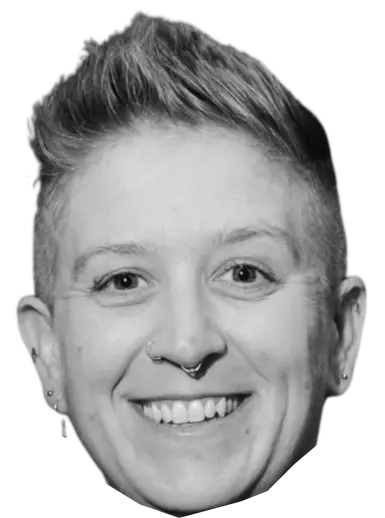
Erin is Managing Director at the Women in Tech SEO community - focused on understanding people and connecting them to the relationships and resources that support them.