.webp)


It usually starts small, but it certainly escalates quickly. A trusted member of your community, someone who’s been posting for a while, a moderator… Begins sharing grievances across every channel.
Private messages land in your inbox from loyal members saying they feel pressure to pick a side. Threads that used to hum with engagement go cold overnight. By the time you can pinpoint what’s happening, a faction of community members has already formed a shadow network outside your platform (or within it), and the narrative is moving without you.
This is no ordinary conflict. This is a putsch - a rogue yet coordinated attempt to seize control (in terms of narrative and governance) of your community. For brands, the stakes are high: community members rebelling bleeds directly into brand perception, media risk, and employee morale.
The good news is that no crisis is fatal by default. Here are a few lessons drawn from brands that have already navigated the turbulence of a community putsch.
Most community builders miss the early signals because they look like the ordinary kind of friction one may witness within one’s community.
However, there are three warning signs that distinguish an organized putsch from your typical bad week:
The Reddit API crisis of June 2023 is a classic example in that sense and offers a cautionary tale. When Reddit announced new API pricing that would make most third-party apps economically unviable, the backlash was not spontaneous - it was organized. Over 8,300 subreddits, representing a combined subscriber base of 2.8 billion, pledged to go dark in a coordinated blackout led by tens of thousands of volunteer moderators. The insurgency succeeded because Reddit had spent years treating those moderators as platform users rather than community co-owners.
To avoid such dramatic escalations, here are some healthy habits: running a simple weekly temperature check in one of the community’s main channels, or a monthly pulse-check call with a few key members, or a scan of adjacent third-party spaces (Discord, WhatsApp, Slack groups) where shadow networks tend to form first. In other words: keep tabs on your member’s moods and the community’s vibe.
Misdiagnosing the type of putsch they have entered is also a common mistake brands make. Because, mind you, as a French citizen, I can guarantee not all insurgencies are the same. If you’re caught in the turmoil, a good way to react is to start by mapping the situation against two axes: is the grievance legitimate or manufactured, and is the intent reform or plain and simple takeover?
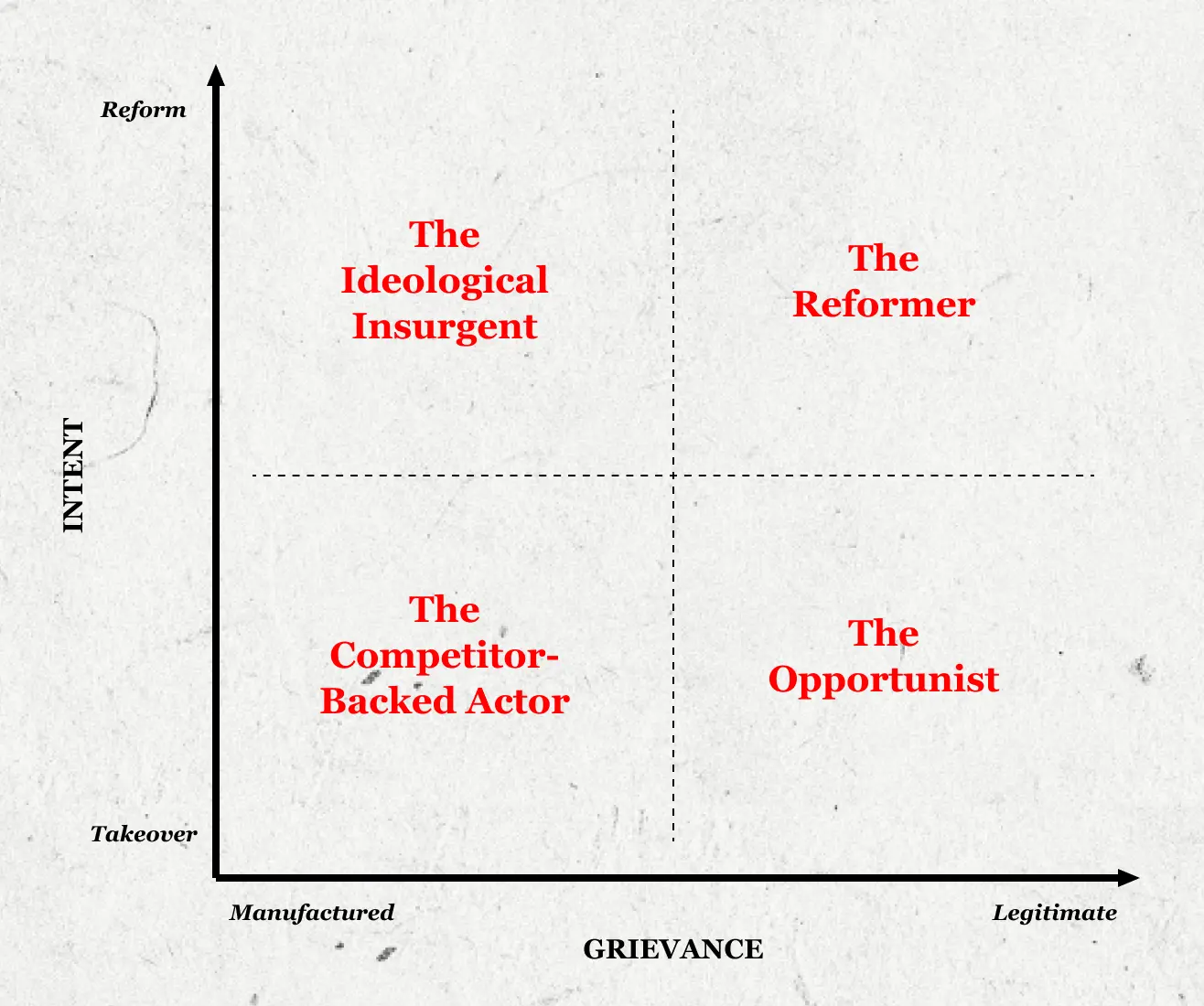
This gives you four archetypes that each require a different response:
So, what kind of response is adequate for each of these archetypes? Here are some thoughts:
Every professional communicator skilled in crisis management will tell you that the first 48 hours set the narrative frame that everything else gets interpreted through.
Glossier learned this the hard way in 2020 when former retail employees published an open letter about a toxic work environment and racism. The brand's initial silence was read as guilt. When they did respond, the corporate tone of the first statement made things worse and drew the wrath of the community.
By contrast, when Notion suffered a major outage that same year and community frustration spiked hard, their team pinned a raw, human update, resembling something like ‘We know this is bad. Here is exactly what we know right now. We’ll come back with updates as soon as we know more.’ The crisis de-escalated faster than the technical fix alone would have warranted.
So, what can you learn from these examples? Here are some absolute dos:
What not to do:
Surviving is not enough. After a putsch, you need to rebuild legitimacy and trust. Three moves matter most:
Also: conduct a structural audit. What governance gaps did this crisis exploit? Vague moderation rules? No escalation path? No member charter? Fix those now, while the lesson is fresh and the community is watching.
A putsch in a branded community is not just internal drama. It carries downstream consequences for brand perception, community tone, and individuals’ morale. The key to build long-term resilience is to build solid trust, relying on a distributed and transparent governance.
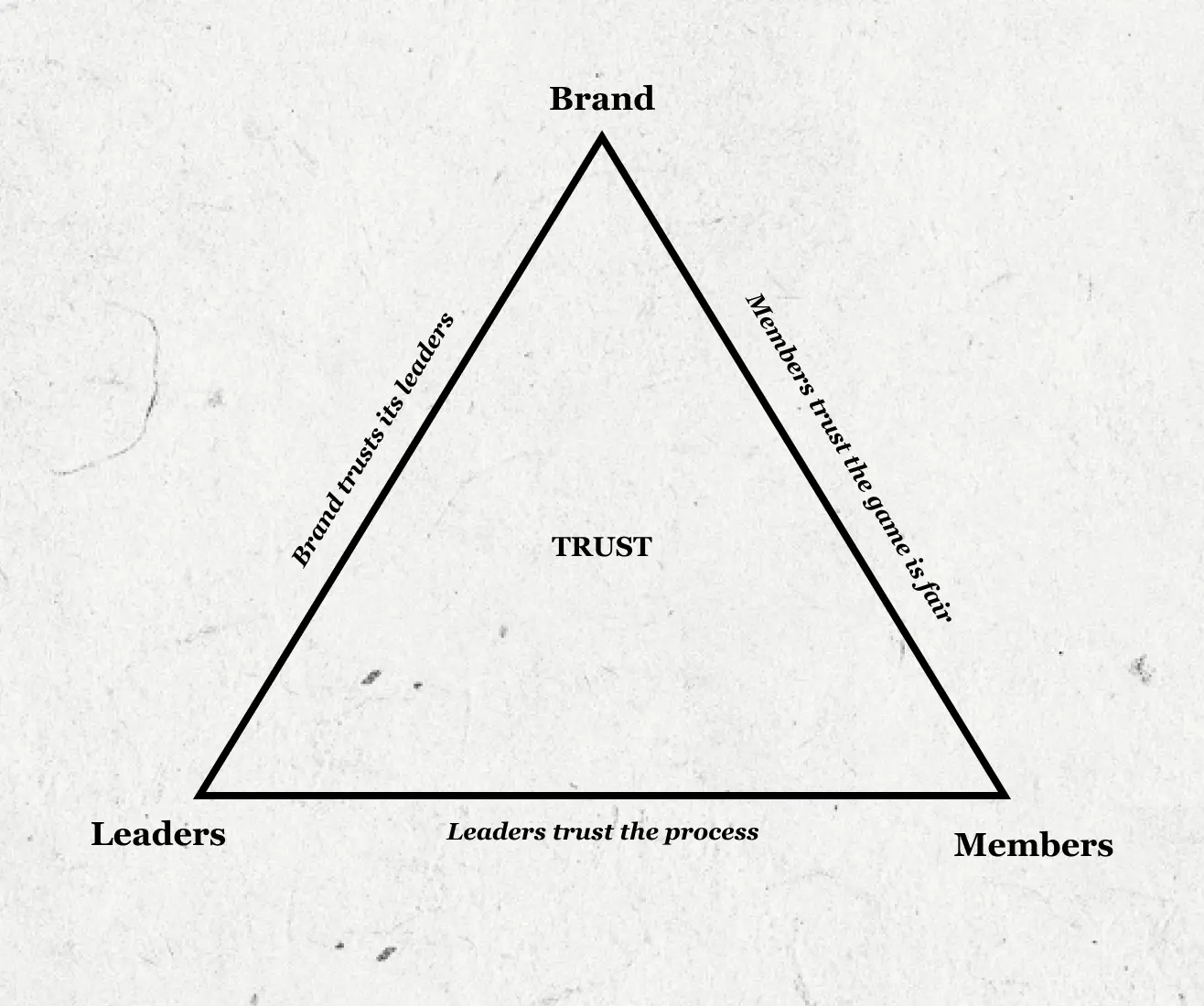
One way to look at it is the trust triangle of communities: the relational system that binds a brand, its community leaders, and its members through mutual trust. A community only works if the brand trusts its leaders, leaders trust the process, and members trust that the game is fair. A putsch always attacks one side of that triangle: break one link, and conflict spreads fast.
Lego Ideas shows what a healthy trust triangle looks like under stress. The community has survived multiple moments where factions pushed hard against rejected submissions or perceived favoritism. It held because the trust triangle was intact: clear pre-existing rules, community leaders who were genuinely consulted, and members who trusted the process even when they disliked specific outcomes.
Compare this to Reddit's API pricing crisis. When Reddit changed its API pricing, moderators - unpaid community leaders who sit at the very center of the trust triangle - coordinated a blackout of thousands of subreddits. Reddit's mistake was treating moderators as platform users rather than community co-owners. This massively damaged the brand’s relational capital. The putsch succeeded in generating massive negative press precisely because the relationship had been neglected for years.
When it comes to clear governance rules and transparency, it’s always useful to rely on rules that existed before the crisis. This is what Lego Ideas got right. When the rules are known, fair, and applied consistently, bad actors have very little to work with.
A putsch is, ultimately, a stress test. No playbook removes the discomfort of going through this messy, very human experience. But communities that survive these moments often emerge more cohesive than before, because they then share a story of resilience. The members who stayed through the fire can become your strongest advocates.
To navigate it best is not done with the most sophisticated moderation tools, but rather a strong investment in relationships before the crisis arrived. Trust, once built, is the most durable infrastructure a community can have.

A writer and brand strategist based in France, Noémie explores how communities shape power, culture, and belonging - and how brands have become a central part of that story. Noémie works with organizations ready to move from marketing to meaning.